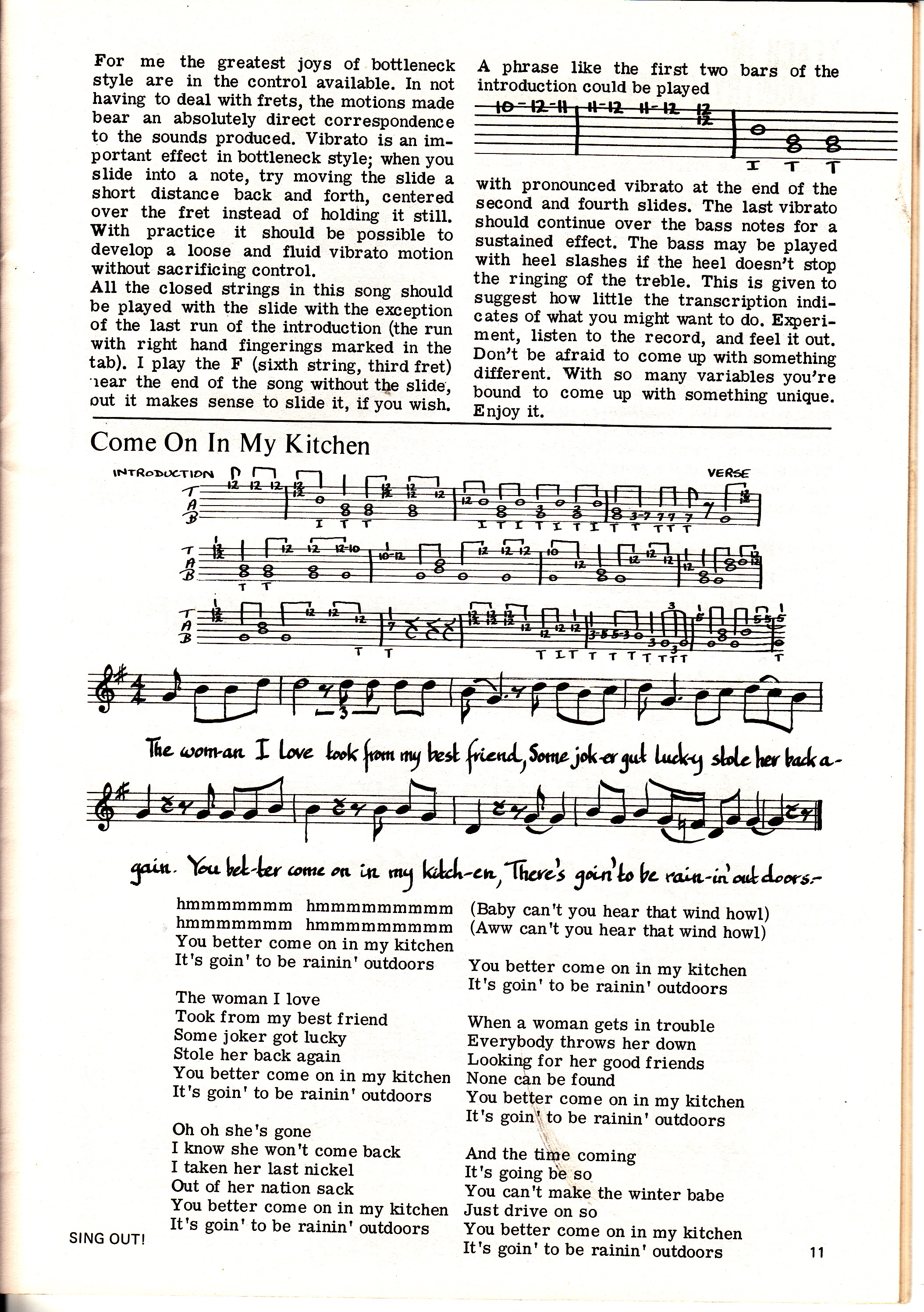
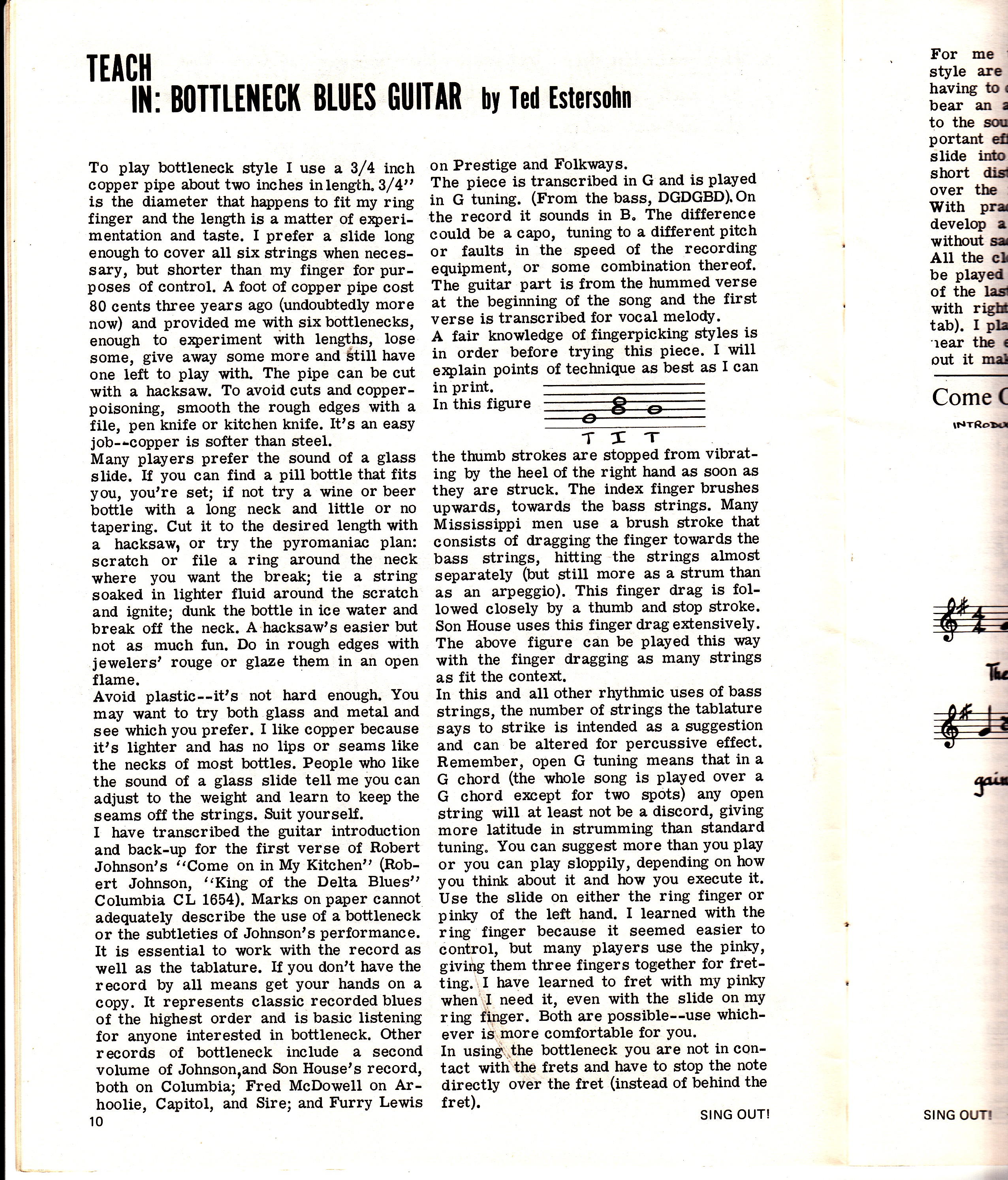
I'll stand by most of my comments. The bit on making your own bottleneck needs updating, though. In 1971, music stores did not offer a selection of ready-mades for sale so the whole section could be considered obsolete. However, I have come to prefer the necks of Bordeaux wine bottles. They have broad shoulders for catching sediment and straight necks. Most importantly, the glass is harder than the thick walled clear lab glass one finds in the store bought slides. Harder equals brighter tone. I now play the slide on my pinky and have done for so long that I was surprised to see that I wrote of preferring the ring finger in 1971. I can't remember actually using a hacksaw on glass, as I wrote. Being no longer 19 years old and broke, I have invested in a Dreml tool with diamond cutting wheels, which works well. I still have the last piece of that copper pipe (80 cents a foot!) in my pocket as I type this in 2025, ready to bottleneck on demand wherever I go! On the second page, the bit of untimed tablature at the end of the prose section was intended to give a sense of how one might expand the pick up notes to the intro. Replace the 2 bar lines with a double bar before the double 12s on the top 2 strings. Grace notes in tab are difficult. There may well be other editing errors in the published transcription. That is certainly not my calligraphy, and if you would see my handwriting you just might be thankful for a spurious bar line in the clean copy. The point is that one can vary the attack with the slide: spot on or slid into at different lengths and speeds. This along with right hand effects like mutes and finger drags offer a large area for personalization.
FUN FACT FROM THE DIGITAL AGE. Although I learned it intuitively playing with Mississippi Fred McDowell around the time that I wrote for Sing Out!, I can now state that by computer measurement, Fred's "blue" third is (in D tuning) F natural plus 36 cents. That's the bottleneck placed about a third of the way past the third fret on first string. This would transpose to a B flat, sharped by about 1/3 of a semitone in G. All of these tips point to feel and ear things one can find.